


Fire detection installation: what the system is and how it is carried out step by step

A fire detection system senses smoke or heat and alerts everyone in the building. To work properly, it needs preparation: fire detection installation starts before the first detector goes up on the ceiling. This guide explains what the system is made of, what role the fire protection study plays and which steps are followed up to handover.
Fire detection installation follows this order: a study that sets out what goes where, mounting the control panel and wiring the zones or the loop. Next come the detectors, call points and sounders, then programming and testing of every device. At the end, you receive the system together with its drawings and instructions.
Tell us which premises you want to protect, how many floors they have and whether a study already exists, and we will get in touch with you.
What a fire detection system does
A fire detection system detects smoke or heat and raises the alarm with sounders and beacons. The alarm is triggered in two ways: automatically, when a detector senses smoke or heat, or manually, when someone presses a manual call point.
All signals end up at the fire control panel, which identifies where the alarm came from and activates the sounders. In a conventional system, the panel shows the zone of the alarm. In an addressable system, you can see exactly which detector or call point was activated.
Such a system is different from a standalone smoke alarm. The European technical specification CEN/TS 54-14, for the design and installation of fire detection systems, does not cover standalone smoke alarms to standard EN 14604. You will find Comelit devices for complete systems in our range of fire detection equipment, divided into conventional and addressable systems.
The parts: control panel, detectors, call points, sounders
Every system has four main parts: the control panel, the detectors with their bases, the manual call points and the sounders or beacons. In an addressable system, input and output modules and expansion cards are added where needed.
Fire control panel
It receives the signals and shows alarms and faults. Comelit conventional panels have 4, 8 or 8 to 16 zones. The 4- and 8-zone units accept up to 32 sensors or push buttons in each zone.
Detectors
There are optical smoke detectors, heat detectors and multi-sensor detectors, which combine smoke and heat. Each detector clips into its own base, where the cables are connected.
Manual call points
They send a signal to the panel when someone presses the marked area. A front LED shows the alarm or test status.
Sounders and beacons
They give warning with sound and light. The Comelit conventional sounder with red beacon has 32 tones and two volume levels, set with jumpers.
In the conventional system devices are connected to zones on the panel. In the LOGIFIRE addressable system each device has its own address on the loop. The LOGIFIRE 41CPE118 panel accepts up to 250 addressable devices on each loop and can be expanded to 8 loops.
The fire protection study before installation
The fire protection study sets out the measures and equipment the building needs and shows them on the drawings. It is prepared, signed and stamped by a qualified engineer. It includes a written report or floor plan drawings.
For businesses and facilities that fall under Fire Service Ordinance 13/2021, the active fire protection study is approved by the Fire Service. The application is submitted online by an authorised engineer through the e-Adeies system. Among other things, the procedure is based on the building fire protection regulation of Presidential Decree 41/2018.
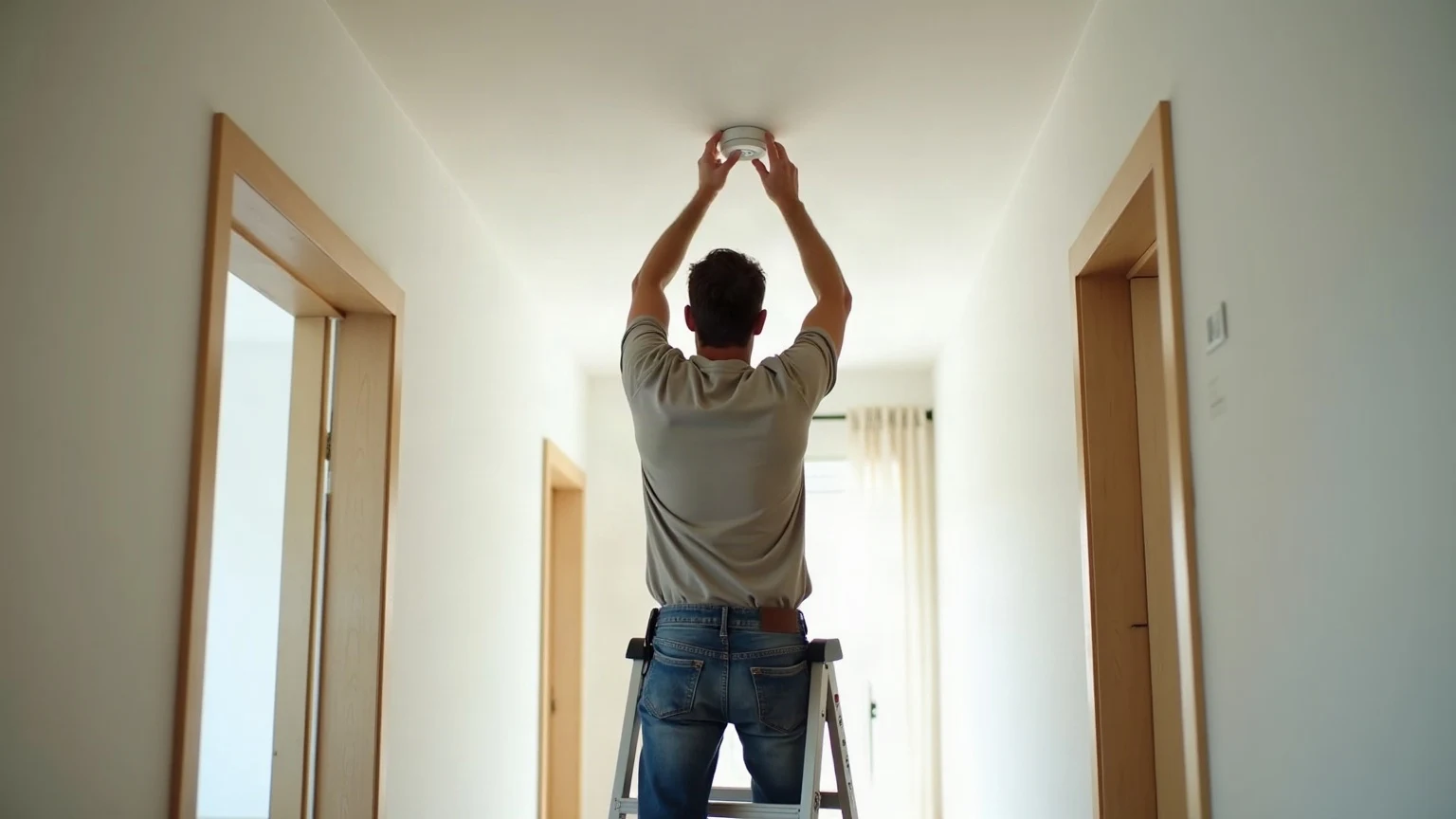
For whoever carries out the fire detection installation, the study is the guide to the job. From its drawings, the installer takes the positions and the number of detectors, call points and sounders. For the LOGIFIRE addressable system, Comelit also provides a loop and battery calculation tool, the Loop & Battery Calculator.
The installation steps
With the study in hand, the work moves from the panel to the devices and ends with testing. A typical sequence of tasks is as follows:
- Checking the study on site. The installer walks through the building with the drawings and confirms the positions of the panel, detectors, call points and sounders.
- Mounting the panel. The panel is installed in the position set out in the study and connected to the power supply and the secondary power supply battery.
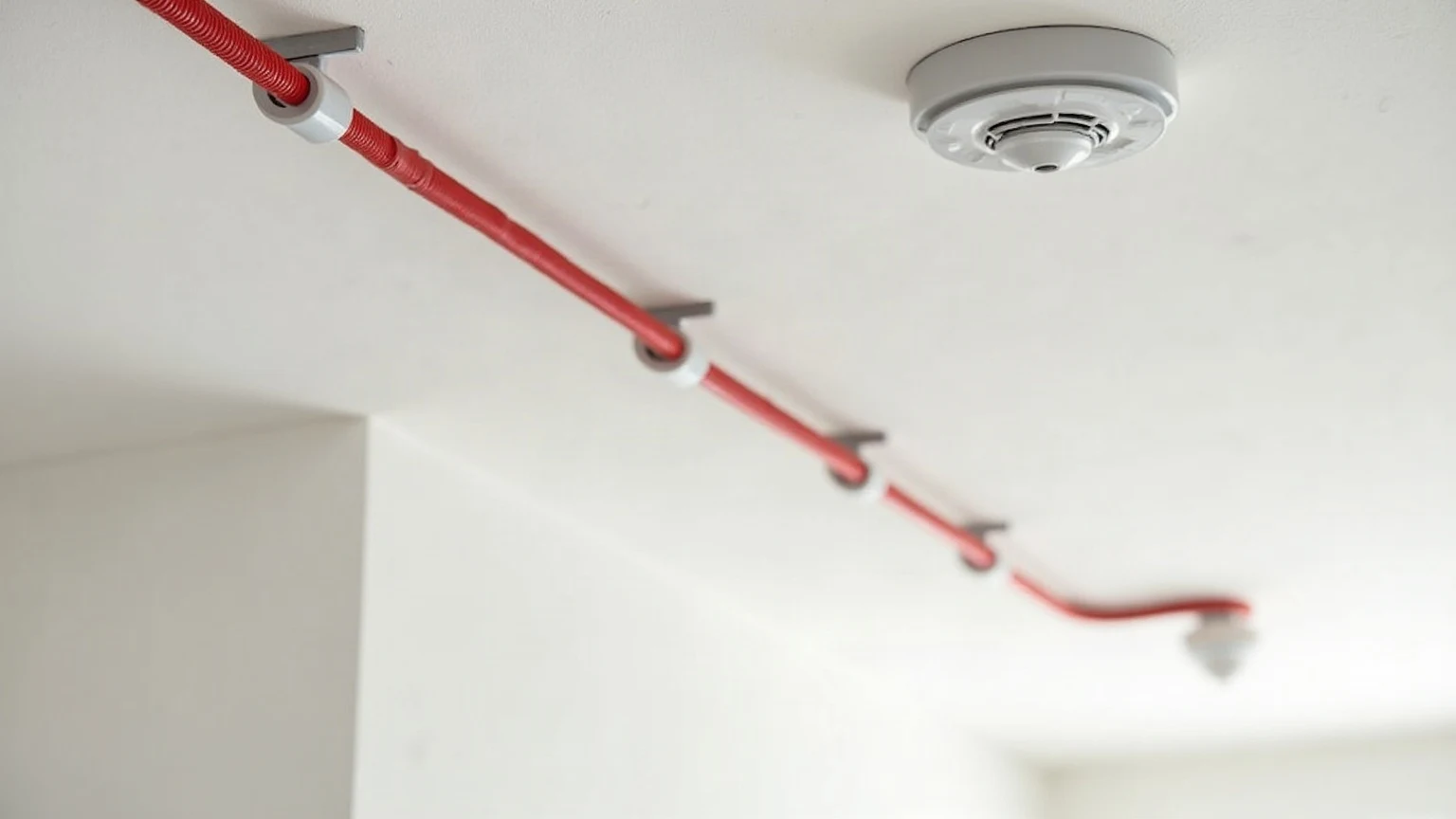
- Wiring the zones or the loop. The cables run from the panel to every point. Their cross-section follows the manufacturer's limits: on the 41ECL022 loop card, it is 0.4 to 2.0 mm².
- Bases and devices. The bases are fixed, the cables are connected and the detectors are clipped in. Then come the manual call points and the sounders.
- Addressing and programming. In the addressable system, each device is given an address using the 41SPG000 hand-held programmer, which reads and writes addresses and sets the parameters of detectors and modules. For the LOGIFIRE 41CPE118 panel, there is Comelit's Logiprog software.
- Testing and handover. Every detector, call point and sounder is tested, the panel is checked for faults and the system is handed over to the user.
The work is carried out by an installation technician. Installers who work with Comelit in each area can be found on the page listing Comelit partners.
Testing, handover and documentation
Before handover, it is good practice to test the whole system, device by device. CEN/TS 54-14 gives guidance on the whole life of a fire detection system: design, installation, commissioning, use and maintenance.
The test checks that every detector and every call point raises an alarm in the correct zone or with the correct address, that the sounders can be heard and that the panel shows a fault when something is disconnected. Comelit's ERACLE 4- and 8-zone conventional panels continuously monitor the lines through an end-of-line impedance and have a Walk Test function for testing. In addition, the conventional base with diode makes it possible to detect if someone removes the detector from its base.
The LOGIFIRE 41CPE118 panel shows indications on its front for alarm, pre-alarm, fault, disablements and test, as required by EN 54-2. This way, the user can see the status of the system at a glance.
At handover, ask for the as-built drawings, the list of devices with the zone or address of each one, and the user instructions for the panel. With these, whoever carries out maintenance later knows what is installed and where.
Common installation mistakes
Most of the mistakes below can be avoided if they are anticipated in the study and checked before handover.
| MISTAKE | WHAT TO WATCH FOR |
|---|---|
| Installation without a study | The positions and number of devices come from the study and its drawings, not from an estimate made while the work is under way. |
| More devices than the panel accepts | Comelit's 4- and 8-zone conventional panels accept up to 32 sensors or push buttons per zone, and each LOGIFIRE loop up to 250 devices. |
| Cable outside the limits | The cross-section must be within the manufacturer's limits, such as 0.4 to 2.0 mm² on the 41ECL022 loop card. |
| Line without termination | The end-of-line impedance is fitted as the manufacturer specifies, because the conventional panel monitors the line through it. |
| Battery without a calculation | The loop and battery are calculated from the outset, using Comelit's Loop & Battery Calculator for LOGIFIRE. |
| Conventional zone on an addressable system | A conventional zone is connected to the LOGIFIRE system through a dedicated module, such as Comelit's 41ISC000. |
| Handover without documentation | Without drawings and a device list, dealing with any later fault or extension becomes more difficult. |
Frequently asked questions
What is fire detection?
It is the detection of smoke or heat in a building by detectors connected to a control panel. When a detector picks up smoke or heat, or when a call point is pressed, the panel raises the alarm with sounders and beacons.
Is there wireless fire detection?
Yes. There are fire detection devices that communicate over a radio link, and their requirements are set out in standard EN 54-25. Comelit's fire detection systems, the conventional system and LOGIFIRE, are wired: the devices are connected by cable to zones or to the panel's loop.
What does the cost of a fire detection installation depend on?
On how many rooms and floors will be covered and on the number of detectors, call points and sounders. It also depends on whether a conventional or an addressable system will be installed and whether it will be connected to other building systems. Send us these details using the form and we will get in touch with you.
How is a fire detection system wired?
In a conventional system, the detectors and call points are connected to zones on the panel. In an addressable system, they are connected to the loop, each with its own address. The cable cross-section and the number of devices per zone or loop follow the study and the manufacturer's limits.
Request a quote for a fire detection system
Tell us which premises you want to protect, how many floors they have and whether a fire protection study already exists. We will get in touch with you as soon as possible.
Sources
- National Register of Administrative Procedures, Approval of an (active) fire protection study. https://mitos.gov.gr/index.php/%CE%94%CE%94:%CE%88%CE%B3%CE%BA%CF%81%CE%B9%CF%83%CE%B7_%CE%BC%CE%B5%CE%BB%CE%AD%CF%84%CE%B7%CF%82_(%CE%B5%CE%BD%CE%B5%CF%81%CE%B3%CE%B7%CF%84%CE%B9%CE%BA%CE%AE%CF%82)_%CF%80%CF%85%CF%81%CE%BF%CF%80%CF%81%CE%BF%CF%83%CF%84%CE%B1%CF%83%CE%AF%CE%B1%CF%82
- ELOT, Fire detection and fire alarm systems - Part 14: Guidelines for planning, design, installation, commissioning, use and maintenance. https://eshop.elot.gr/en/product/111741
- ELOT, ELOT EN 54-25:2008. https://eshop.elot.gr/en/product/82801
- Comelit, 41CPE118 - Comelitgroup Products Downloads. https://pro.comelitgroup.com/en-gb/product/41cpe118
- Comelit, 41SPG000 - Comelitgroup Products Downloads. https://pro.comelitgroup.com/en-gb/product/41spg000