


How video door entry works: a beginner's guide

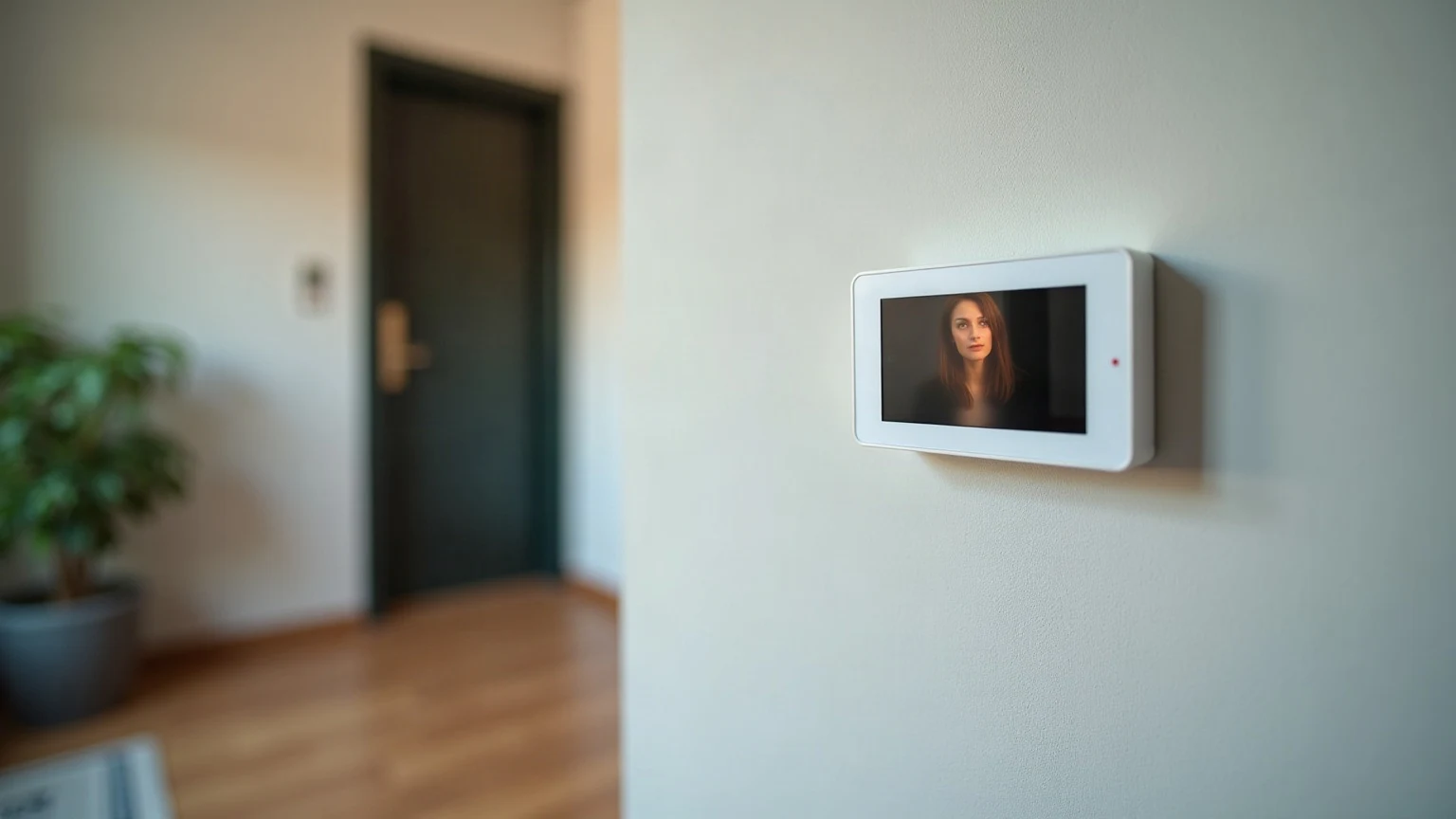
A video door entry system shows you who is ringing the bell before you open the door. If you want to understand how video door entry works before you choose a system, this guide will help. It explains, in plain language, the parts of the system, the route a call takes from the entrance to your home and what changes between a detached house and an apartment building.
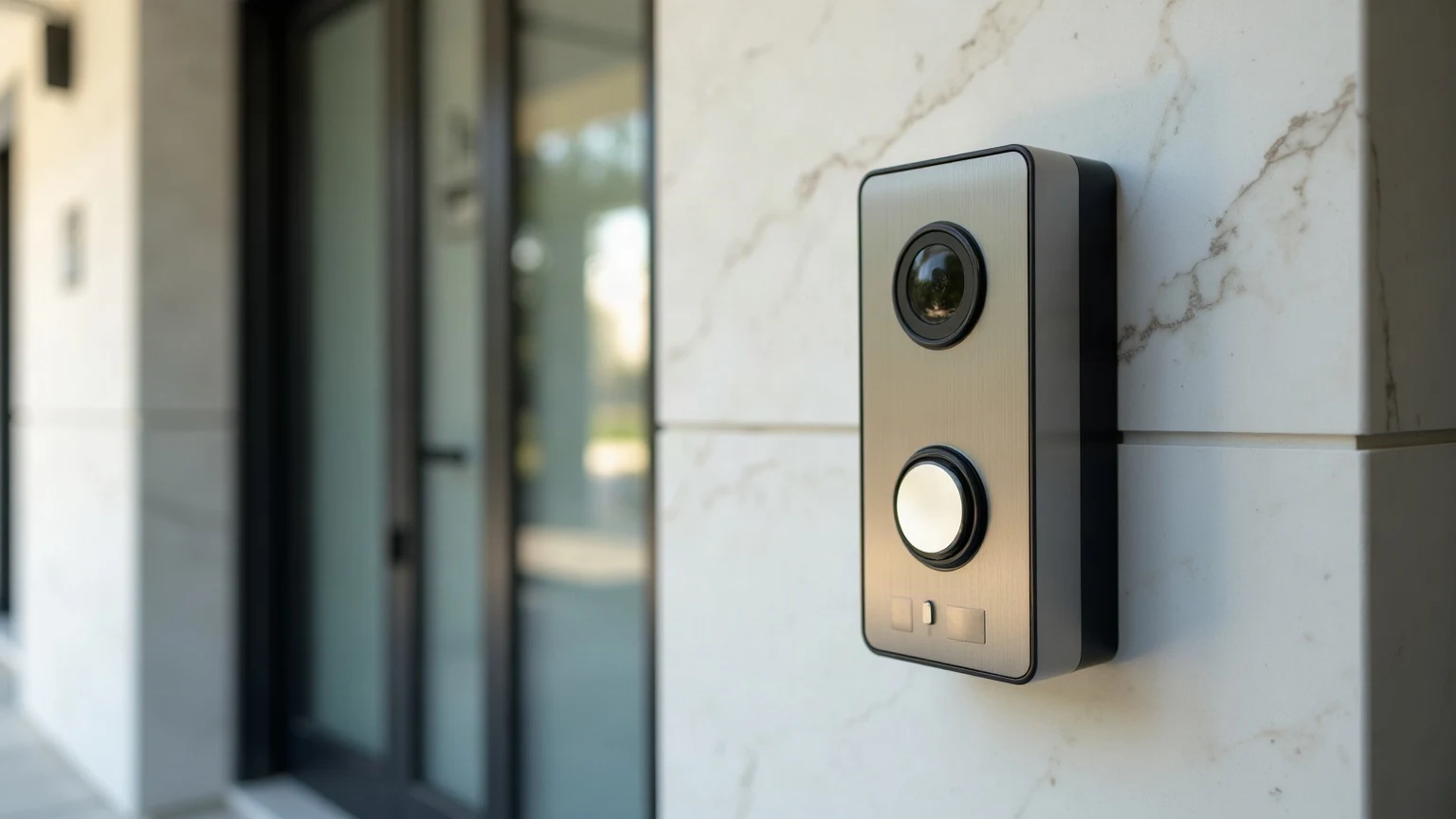
An entrance panel with a camera, microphone and call button is fitted at the entrance. When a visitor presses the button, the call reaches the monitor inside your home, where you can see them, talk to them and open the door. A power supply feeds the system, which is connected with 2 wires (BUS) or over a network (IP).
Tell us what type of building you have and what wiring is there today, and we will get back to you.
What is video door entry?
Video door entry is an intercom system with video between the entrance of the building and the inside of your home. It is also called a door phone with a screen, because it does everything a simple door phone does and adds a picture of the entrance.
With a simple door phone you only hear the visitor's voice. With video door entry you see them on a colour screen, talk to them and then decide whether to open the door. You will find Comelit camera systems for detached houses, flats and apartment buildings on the page about the door phone with camera.
The two solutions can coexist in the same building. In an apartment building, some flats can have video door entry and others a simple door phone, regardless of what the other residents choose.
The main parts: entrance panel, monitor, power supply
Every video door entry system has three main parts: the entrance panel at the door, the indoor monitor inside the home and the power supply that powers the system. Anything else, such as a keypad or card reader, is added where needed.
Entrance panel
The unit at the entrance, with a camera, loudspeaker, microphone and call buttons. In the ULTRA series, the audio/video unit has a wide-angle colour camera with a field of view of 120° horizontally and 90° vertically.
Indoor monitor
The video door entry monitor inside the home, with a 4.3, 5 or 7-inch colour screen, in handset or hands-free versions. From here you see the visitor, talk to them and open the door.
Power supply
It powers the entrance panel and the devices in the home. In 2-wire BUS systems it is a 33 VDC unit with electronic overload and short-circuit protection.
The entrance panel is chosen to suit the building. QUADRA covers 1 to 4 calls, while ULTRA is built from modules and can grow as far as needed. Both have a colour camera, as does ULTRA TOUCH, which has a built-in numeric keypad and RFID reader.
How the call gets from the entrance to your flat
The call starts when the visitor presses your button on the entrance panel and, through the building's wiring, reaches only the device in your own flat. The route is the same in every system:
- Pressing the button. The visitor presses the flat's call button on the entrance panel.
- Sending the call. The entrance panel sends the call, the camera image and the audio along the building's line.
- The monitor rings. The video door entry monitor in the flat rings and shows the image from the entrance.
- Conversation. You answer and talk to the visitor, using the handset or hands-free.
- Opening. If you want to let them in, you press the door release button and the entrance door opens.
In a house with several floors, 2 or more monitors can ring at the same time, so you can answer wherever you are. With the intercom function you can also talk from floor to floor through the video door entry system.
2-wire BUS and IP systems in brief
The difference is the way they connect. A BUS system needs only 2 wires from the entrance to the devices in the home, while in an IP system each device connects to the network.
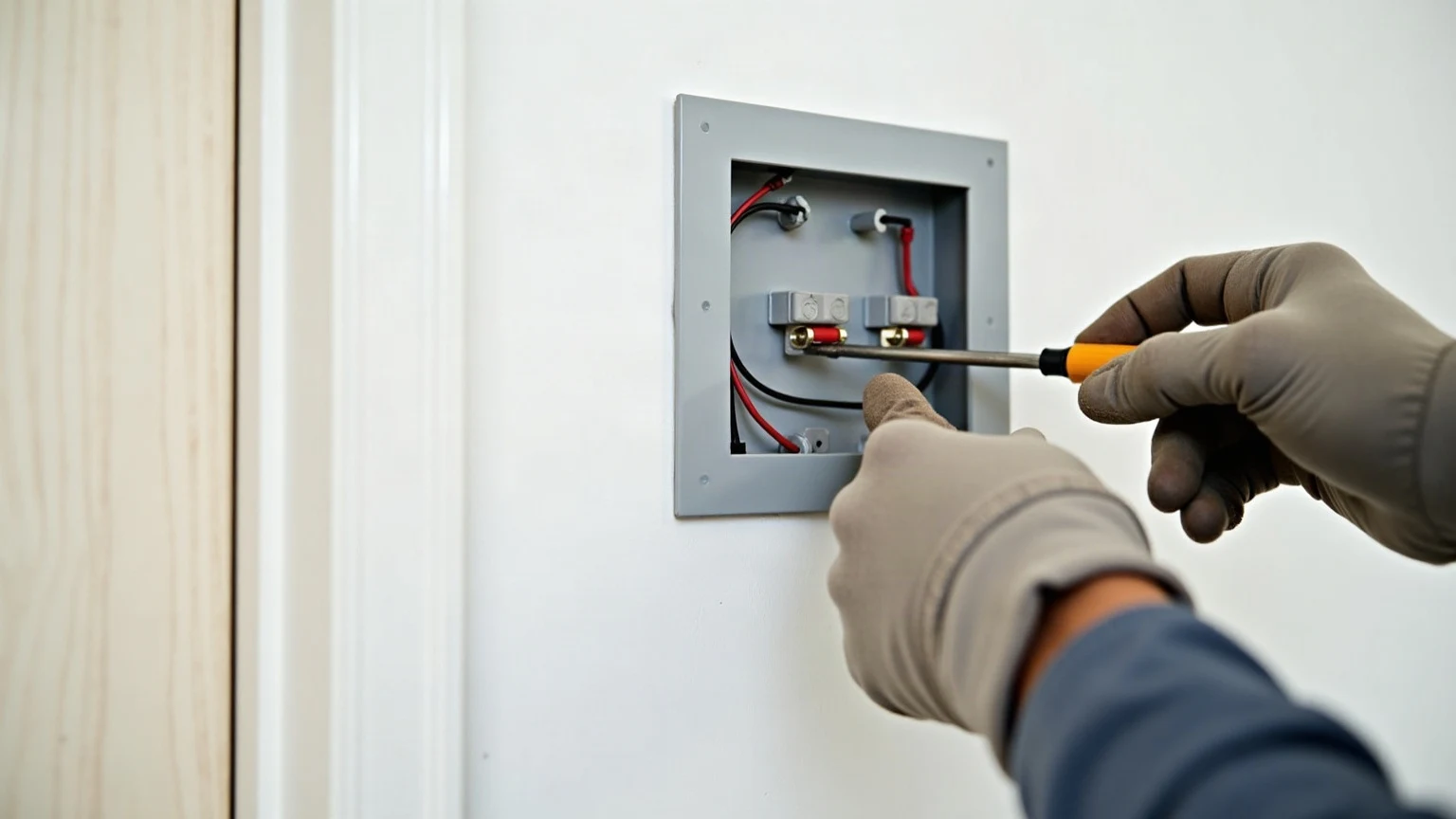
In 2-wire video door entry from Comelit, audio and video travel over the same 2 wires, which are non-polarised. That is why the system can also be installed on old wiring, even if all you have today is a simple doorbell, and it is a good fit when you are replacing an old door phone.
In IP video door entry the devices connect over the network. Comelit offers IP video door entry monitors with WiFi, ULTRA, ULTRA TOUCH, QUADRA and VISTO entrance panels, and a PoE switch to connect them. The VISTO outdoor unit, for example, is powered via PoE.
| FEATURE | 2-WIRE BUS | IP |
|---|---|---|
| Connection | 2 non-polarised wires | Network, with a Comelit PoE switch |
| Power supply | 33 VDC power supply | PoE or 48 VDC and 55 VDC IP power supplies |
| Entrance panels | ULTRA, ULTRA TOUCH, QUADRA, CIAO | ULTRA IP, ULTRA TOUCH IP, QUADRA IP, VISTO |
| WiFi monitors | Mini HF WiFi 4.3", PEOPLE WiFi 5" | Mini HF WiFi 4.3", Maxi WiFi 7" |
Opening the door and calls on your mobile
You open the door with the button on the video door entry monitor, and with a WiFi monitor you can also answer from your mobile. The call reaches the monitor in your home and, through the Comelit app, your mobile or tablet.
WiFi models connect to your home network. From the app you can view the camera and answer calls, whether you are at home or away. They are available for BUS and IP systems, with screens from 4.3 to 7 inches, as the table above shows.
The entrance can also open without a key. A numeric keypad module for codes, or an RFID reader module for key fobs and cards that stores up to 1,500 electronic keys, can be added to the ULTRA entrance panel. If you missed a visitor, the 5-inch PEOPLE models keep up to 8 video recordings.
Detached house or apartment building: what changes
It works the same way in both. What changes is the number of call buttons on the entrance panel and how many devices are connected to the building's line.
Detached house
You need an entrance panel with a camera and one call button, one or more video door entry monitors and a power supply. In a two- or three-storey house, a monitor can be fitted on each floor. See our page on video door entry for detached houses.
Apartment building
The entrance panel has one button for each flat. In the ULTRA series, each button module takes up to 8 calls and the frames hold 1, 2, 3, 4 or 6 modules. See our page on video door entry for apartment buildings.
In a building with more than one entrance a switcher is installed, and the BUS line distributor splits the signal from 1 to 4 risers. The final list of materials depends on the building and the wiring, and it is confirmed by whoever carries out the installation. The installation is handled by authorised Comelit partners.
The cost depends on the number of flats and entrances and on the entrance panel and its modules. It also depends on how many flats will have video door entry, the condition of the wiring and whether you want the door to open with a code or a card.
Frequently asked questions
What is 2-wire video door entry?
It is a video door entry system that works with only 2 wires from the entrance to the devices in the home. At Comelit it is called a BUS system, and it can also be installed on old wiring.
Can I answer the video door entry system from my mobile?
Yes, with a WiFi video door entry monitor. The call reaches your mobile through the Comelit app, both when you are at home and when you are away.
Is there a wireless video door entry system?
In Comelit systems, the entrance panel and the monitors are connected by cable, with 2 wires (BUS) or over a network (IP). On the models that have it, WiFi is used so that the call reaches your mobile.
Can I have video door entry with 2 monitors?
Yes. With parallel monitors, when the visitor presses the bell, 2 or more monitors ring at the same time, for example one on each floor.
Can a door phone be converted to video door entry?
Yes. A BUS system needs only 2 wires in good condition from the existing installation, so the old door phone can be replaced with video door entry without new wiring throughout the building.
Request a quote for video door entry
Tell us how many flats and entrances the building has and what wiring is there today. We will get back to you as soon as possible.
Sources
- Comelit, 6741W - Comelitgroup Products Downloads. https://pro.comelitgroup.com/en-gb/product/6741w
- Comelit, 1210A - Comelitgroup. https://pro.comelitgroup.com/en-gb/product/1210a
- Comelit, VS8101 - Comelitgroup. https://pro.comelitgroup.com/en-gb/product/vs8101
- SourceSecurity.com, Comelit Simplebus from SRS - a unique 2 wire door entry system. https://sourcesecurity.com/comelit-sbv-03-technical-details.html