


Which alarm should I install at home? A guide to choosing a system

The question “which alarm should I install at home?” is not answered by a brand. It is answered by a few decisions, taken in order: your property, a wireless or wired system, the sensors, control from your mobile and the way the system will alert you. This guide explains each of them.
Start with the entry points and rooms you want to protect. If the house has no wiring for sensors, a wireless alarm can be installed without running cables. If it does, a wired alarm is also an option. Then you choose the sensors, control by keypad or app, and communication via GSM, 4G or IP.
Tell us what kind of property you have, how many entry points it has and whether there is wiring, and we will get back to you.
Start with your property: flat, detached house, shop
The right alarm follows from the floor plan of your property. First count the entry points, that is doors, balcony doors and windows that open, and then the rooms you want to cover. This tells you how many magnetic contacts and how many motion sensors you will need.
Lists of the 10 best alarm systems do not know your home. A system for a detached house with a garden has different needs from a flat on the third floor, so a comparison only makes sense once you know what you want to cover.
Flat
In a flat with one entrance, magnetic contacts on the door and balcony doors and a motion sensor in the hallway or living room are the basis. The ready-made NEXUS kits include a control unit, a magnetic contact, a sensor and a remote control.
Detached house
With more entry points, several floors or a yard, outdoor sensors are added to the indoor ones, such as the OUTPRO triple-technology sensor with an IP54 protection rating, along with an outdoor siren. In the wireless SECUR HUB system, the radio repeater extends the range from the control unit.
Shop or office
Here, opening hours and users matter. VEDO control units divide the system into up to 8 areas, each with its own arming schedules, and the NEXUS control unit manages up to 64 users and 8 partitions.
Wireless or wired system
The difference is the way the sensors talk to the control unit: by cable or wirelessly. If the house already has the wiring, or will have it installed during a renovation, a wired system is a good fit. If the house is lived in and you do not want work done on the walls, a wireless alarm needs no cables for the sensors.
Wired system
It is based on the VEDO 34 and VEDO 68 control units, with 8 zones on the board that expand to 34 or 68 mixed wired and wireless zones. With an RF module it also accepts wireless devices. See our wired alarm system.
Wireless system
The NEXUS and SECUR HUB series have 32-zone control units, which reach 96 zones with the auxiliary inputs of the magnetic contacts. The sensors communicate with the control unit through Comelit's two-way wireless protocol. See our wireless alarm system.
In a wireless system, devices such as the NEXUS wireless keypad and the wireless outdoor siren run on batteries, so changing batteries is part of maintenance. For power cuts, the NEXUS control unit has a built-in backup battery for up to 16 hours of operation.
The two solutions are not mutually exclusive. VEDO control units accept mixed zones, so during a renovation you can run cable where possible and fit wireless sensors everywhere else.
Which sensors you need
Every home alarm system is built on two types of sensor: magnetic contacts on doors and windows, and motion sensors in the rooms. Everything else is added according to the home and its risks.
Magnetic contacts
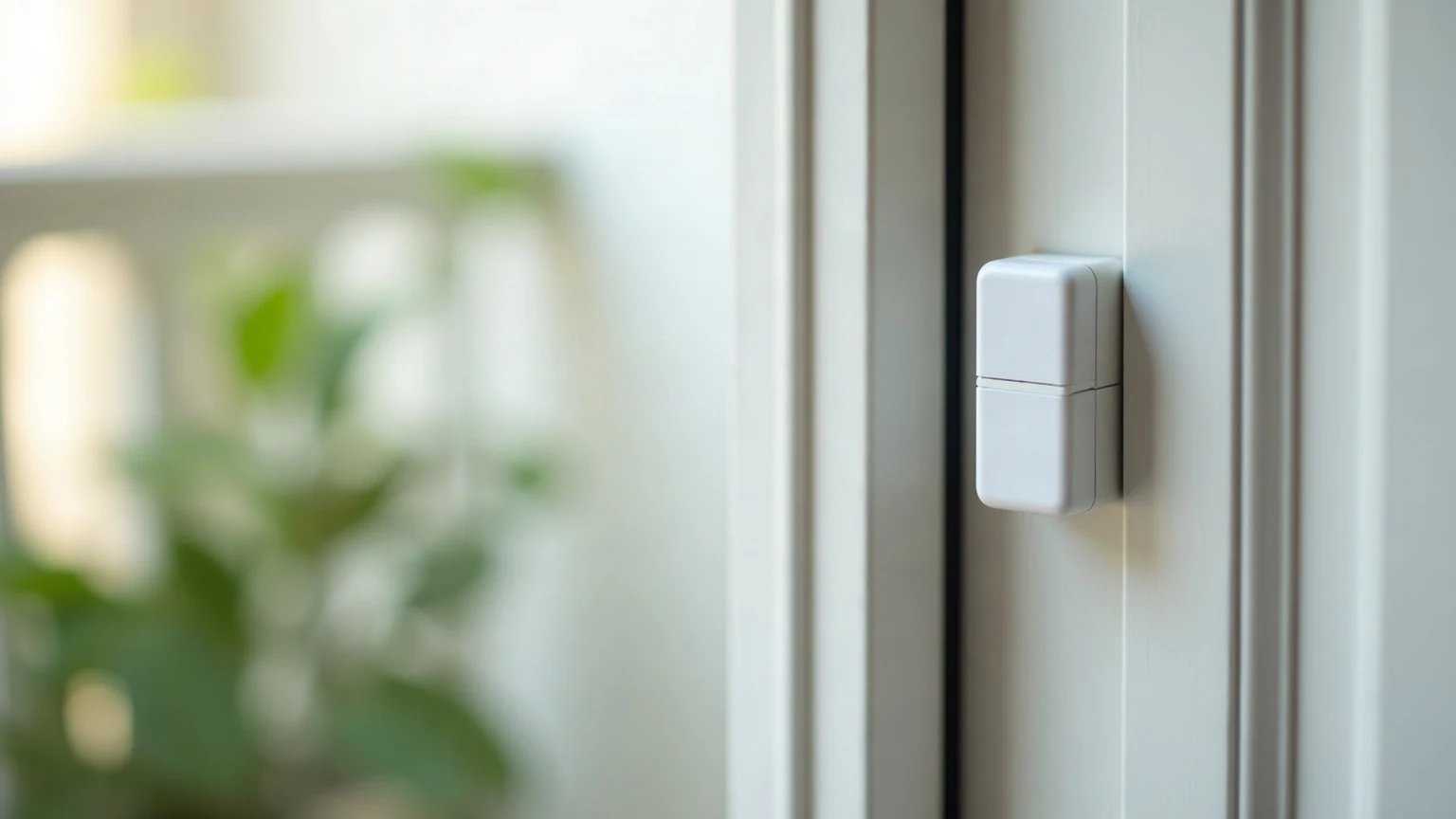
They are fitted to doors and windows and consist of the magnet and the unit that detects it. In the SECUR HUB series they come in white and brown.
Motion sensors
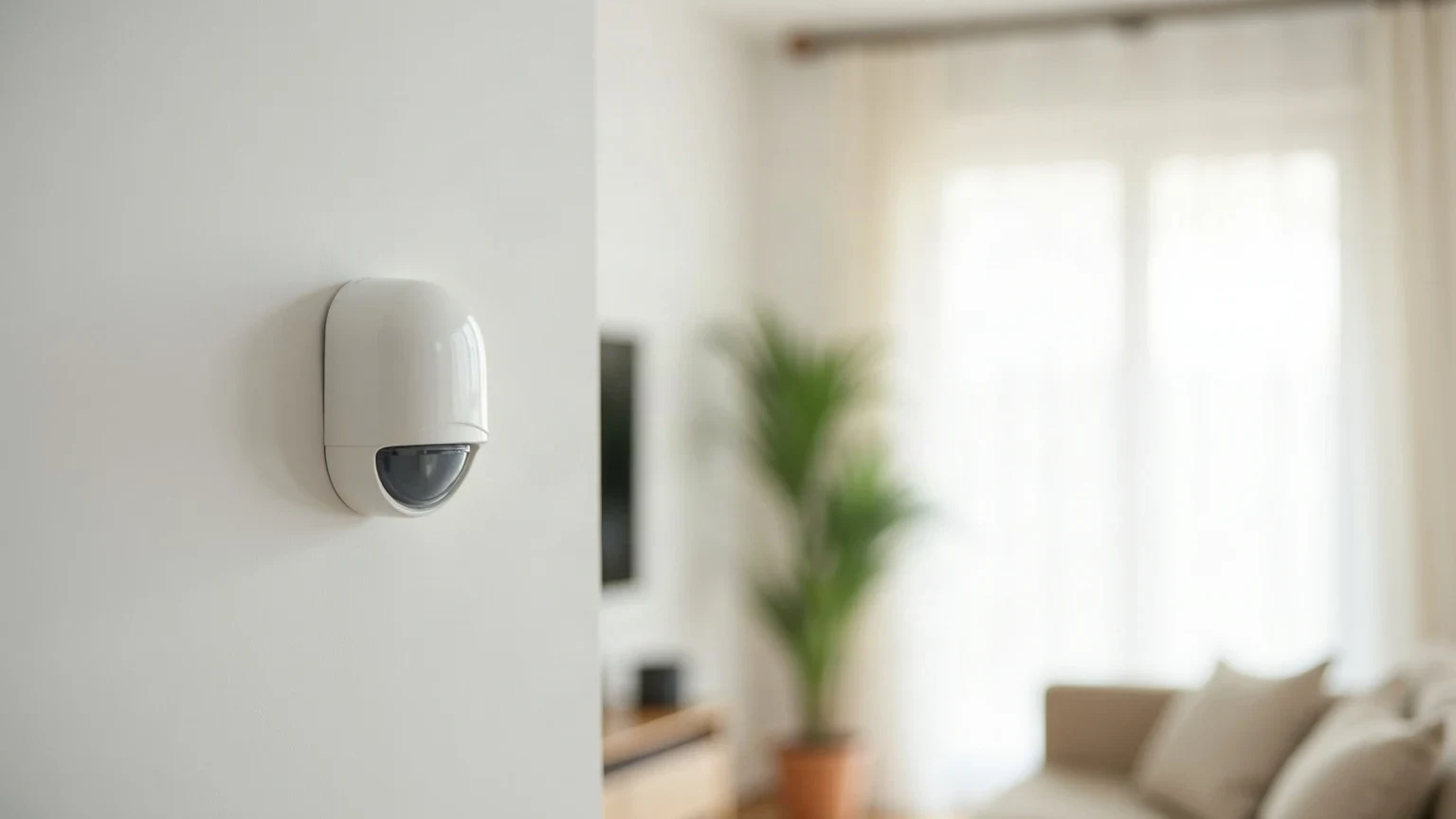
They cover one area, such as the living room or the hallway. The VEDO series has the wired INPRO dual-technology sensor, and SECUR HUB has a 12 m wireless volumetric sensor rated pet immune. If you have a pet, tell the installer from the start.
Curtain and outdoor sensors
Curtain sensors protect openings and walls, such as the outdoor dual-technology sensor with a 12 m range for entrances. For outdoor areas there are the OUTPRO sensors, in wired and wireless versions.
Glass break and special sensors
The acoustic glass break sensor recognises the sound of breaking glass, with a range of 9 or 5 m. There are also smoke detectors, flood detectors and a natural gas and methane sensor.
If you also want to see what happened, you can opt for an alarm system with camera. In the NEXUS system, the motion sensor with a built-in camera takes up to 3 consecutive images for each alarm, and thanks to its infrared LEDs it gives a picture even in the dark.
The siren completes the system. The wired VEDO range has a self-powered Grade 2 outdoor model with a flashing LED lamp. In the wireless system, the volume and duration of the outdoor siren's sound can be changed remotely, without opening it.
Control panel, keypad and mobile app
The control panel is the unit that all the sensors report to, and you operate it from a keypad, a remote control or your mobile. If you want an alarm with an app, check whether the app only sends alerts or can also configure the whole system.
The NEXUS control unit is fully configured from the Comelit Nexus App, which acts as the system administrator. For those who also want buttons on the wall, there is a soft-touch wireless keypad with 4 indicator lights that show whether the system is armed, whether there is a fault and whether there is an alarm.
The SECUR HUB control unit has a built-in backlit keypad whose lighting can switch off completely when the system is on standby, and it is programmed via USB, LAN and the cloud. With the optional 4G module you can also manage it from the Comelit app.
With the wired VEDO system you choose between a keypad with an alphanumeric LCD and a 5-inch Safe Touch touchscreen keypad with a built-in RFID reader to identify users.
Communication: GSM, 4G, IP
Communication determines how you will find out that the alarm has gone off while you are away. Over the mobile network (GSM, 4G), the control unit makes calls and sends SMS messages, while over a network connection (IP, WiFi) it sends notifications and lets you manage it remotely.
| SYSTEM | CONNECTIONS | WHAT YOU GET |
|---|---|---|
| VEDO | Built-in PSTN, GSM (2G) and IP cards | Calls, SMS, MMS and email, management and updates via IP |
| SECUR HUB | Built-in WiFi and LAN, optional 4G module | Calls and SMS, email and push notifications via the Comelit cloud |
| NEXUS | Built-in 4G (LTE), WiFi and Ethernet | Full management from the Comelit Nexus app via the cloud |
If the house has no fixed internet connection, you need a mobile connection with a SIM card. If it does, IP adds notifications on your mobile and remote management. The GSM card in VEDO units works as the main or backup dialler, and the SECUR HUB 4G module as the main or backup connection alongside WiFi or LAN.
What to ask the installer before you decide
Before you accept a proposal, ask the installer to see the property and answer six questions:
- Which security grade is right? The EN 50131 standard classifies alarm systems into 4 grades. Grade 2 is aimed at more experienced burglars with tools, and its sensors are considered suitable for homes.
- How many sensors, and where? Ask for a floor plan showing the positions of the magnetic contacts and motion sensors.
- What happens in a power cut? Ask whether the control unit has a backup battery and how many hours it lasts.
- How will I be notified? By call, SMS, mobile notification or all of these, and what happens if the internet goes down.
- Can it be expanded? The number of zones left free in case you later want an outdoor sensor, a camera or a smoke detector.
- Who carries out maintenance? Ask about battery replacement, system checks and technical support.
Installation is carried out by authorised Comelit partners. The cost depends on the areas and entry points to be protected and on the number of sensors and contacts. It also matters whether the system will be wired or wireless and whether a ready-made kit is used.
Frequently asked questions
What is the best alarm brand?
There is no single brand that suits every home. Compare systems on their EN 50131 security grade, the sensors you need, the communication method and the support from the installer.
What are the best wireless home alarm systems?
The ones that cover all the openings in your home and have two-way communication between the sensors and the control unit, a backup battery and the connection you need. At Comelit the wireless series are NEXUS and SECUR HUB, with 32-zone control units.
What is an alarm magnetic contact?
It is the sensor fitted to doors and windows. It has the magnet and the unit that detects it, and when the door or window is opened while the alarm is armed, the control panel triggers an alarm.
What is an alarm radar?
“Radar” is what people often call the motion sensor, which detects movement within an area and sends a signal to the control panel. There are infrared sensors, dual-technology sensors, curtain sensors and outdoor sensors.
Are there wireless alarm systems with WiFi?
Yes. NEXUS has built-in WiFi, Ethernet and 4G, and SECUR HUB has WiFi and LAN. They connect to the app over the internet, while the sensors communicate wirelessly with the control panel.
Request a proposal for a home alarm system
Tell us what kind of property you have, how many entry points and rooms you want to protect and whether there is wiring. We will get back to you as soon as possible.
Sources
- Comelit, RFNEXUS - Comelitgroup Products Downloads. https://pro.comelitgroup.com/en-gb/product/rfnexus
- Comelit, HUB32LCD - Comelitgroup Products Downloads. https://pro.comelitgroup.com/en-gb/product/hub32lcd
- Comelit, HUB4G - Comelitgroup. https://pro.comelitgroup.com/en-gb/product/hub4g
- Comelit, VEDO34EN - Comelitgroup Products Downloads. https://pro.comelitgroup.com/en-gb/product/vedo34en
- OPTEX Europe, What are Grades in sensors and why are they important? https://www.optex-europe.com/news-events/what-are-grades-in-sensors-and-why-are-they-important